Maintaining a hygienic food preparation environment requires a deliberate balance between microbial control and chemical safety. Everyday cooking tasks introduce proteins, fats, and moisture that foster colonies of bacteria such as Salmonella enterica, Campylobacter jejuni, and Escherichia coli. In response, many households apply concentrated commercial disinfectants indiscriminately, creating unnecessary indoor air pollutants and leaving chemical films on prep surfaces. Low-tox cleaning does not mean abandoning sanitation; it requires matching the right active compound to the specific microbial risk while respecting material limits and human biology.
Three active agents form the backbone of practical kitchen sanitation: dilute sodium hypochlorite (bleach), hydrogen peroxide, and organic acids such as citric and acetic acid. Each operates through distinct chemical pathways, presenting specific trade-offs in dwell time, volatile emissions, and surface degradation. By understanding the chemical mechanisms of these compounds, home cooks can eliminate foodborne pathogens effectively without exposing household members to irritating fumes or damaging expensive counter materials.
Differentiating Between Cleaning and Disinfecting
Cleaning and disinfecting are distinct chemical and mechanical processes that cannot be executed simultaneously with a single pass of a rag. Cleaning refers to the physical removal of soil, grease, minerals, and organic debris from a surface, typically using warm water and an anionic or nonionic surfactant like liquid dish soap. The surfactant lowers the surface tension of water, emulsifying fats and suspending food particles so they can be rinsed or wiped away. Cleaning dramatically lowers microbial counts by mechanical friction, but it does not reliably destroy bacterial cell walls or inactivate viral structures.
Sanitizing and disinfecting, by contrast, rely on chemical agents designed to inactivate or destroy microorganisms directly on contact. Sanitization reduces bacterial populations on clean surfaces to levels evaluated as safe by public health standards, typically requiring a 99.999 percent reduction on food equipment. Disinfection demands an even higher threshold of pathogen destruction, including hardier viruses and fungal spores. Neither process works reliably if an organic barrier remains on the target material.
Applying an antimicrobial agent directly onto a grease film or dried residue results in immediate failure. Organic soil consumes the oxidation capacity of sanitizers such as bleach and hydrogen peroxide before the molecules can reach the underlying microbes. Furthermore, lipids and dried carbohydrates shield embedded bacteria from chemical contact. To establish a sanitary zone, follow this standard sequential method:
- Remove loose crumbs, oils, and dried food residues using a damp sponge.
- Wash the surface using hot water and a mild detergent, scrubbing in circular motions to lift bonded grease.
- Rinse the surface with clean water or wipe away detergent suds with a wet, dedicated cloth, as residual surfactants can neutralize certain sanitizers.
- Apply the selected sanitizing or disinfecting solution across the target area, ensuring complete and uniform surface wetness.
- Allow the agent to remain wet for the full duration specified by its chemical contact requirements.
Contact Time Requirements for Active Agents
An antimicrobial solution does not kill pathogens upon contact. The active chemistry requires a specific window of undisturbed liquid presence, known as the contact or dwell time, to permeate cell walls, disrupt protein structures, or denature nucleic acids. Wiping a sanitizer dry immediately after spraying negates its antimicrobial properties, reducing an intended disinfection process to an ineffective wet wipe.
Contact times vary significantly among active agents, driven by their concentration, stability, and oxidization rate. Fast-acting oxidizers like sodium hypochlorite work within a couple of minutes, while weaker organic acids demand longer immersion or sustained wetness to destabilize bacterial cell membranes. If a surface dries naturally before the dwell time finishes, the active chemical ceases to function against target microbes, requiring a fresh application.
| Active Agent | Typical Home Concentration | Required Wet Contact Time | Rinse Required on Food Prep Surfaces? |
|---|---|---|---|
| Sodium Hypochlorite (Bleach) | 200 parts per million (ppm) | 1 to 2 minutes | No, if allowed to air dry completely at 200 ppm |
| Sodium Hypochlorite (Bleach) | 1000 ppm (Disinfection level) | 5 to 10 minutes | Yes, rinse with potable water after dwell time |
| Hydrogen Peroxide | 3 percent solution | 5 to 8 minutes | No, degrades to water and oxygen |
| Citric Acid | 6 percent solution | 5 to 10 minutes | Yes, prevents sticky crystallization and acid transfer |
| Acetic Acid (White Distilled Vinegar) | 5 percent concentration | 10 to 15 minutes | Optional, but recommended to remove odors and acid residue |
The values shown above assume a thoroughly pre-cleaned surface maintained at ambient room temperature, roughly 68 to 72 degrees Fahrenheit (20 to 22 degrees Celsius). Lower ambient temperatures slow down chemical reaction rates, which requires increasing contact times to achieve the same antimicrobial efficacy.
Hydrogen Peroxide Capabilities on Food Contact Surfaces
A standard 3 percent hydrogen peroxide solution offers exceptional utility on food-contact counters and prep tools. Structurally, hydrogen peroxide is water with an extra oxygen atom. This unstable bond yields a potent oxidizer that produces hydroxyl free radicals, which attack bacterial cell membranes, oxidize protein structures, and damage microbial DNA. Despite this powerful activity, hydrogen peroxide breaks down cleanly into harmless water and oxygen gas, leaving no synthetic surfactants, volatile aromatics, or persistent toxic residues behind.
These decomposition qualities make hydrogen peroxide ideal for cutting boards, interior refrigerator shelving, and prep counters where raw meat, fish, or produce sit directly on the substrate. Standard store-bought 3 percent hydrogen peroxide can be used undiluted straight from its dark bottle. When applied to surfaces contaminated with organic enzymes, it may fizz gently as catalase enzymes in bacteria and meat juice decompose the compound, releasing visible oxygen gas.
To sanitize a nonporous food preparation counter with hydrogen peroxide, use this direct method:
- Wash the counter with hot water and soap, then dry with a clean towel.
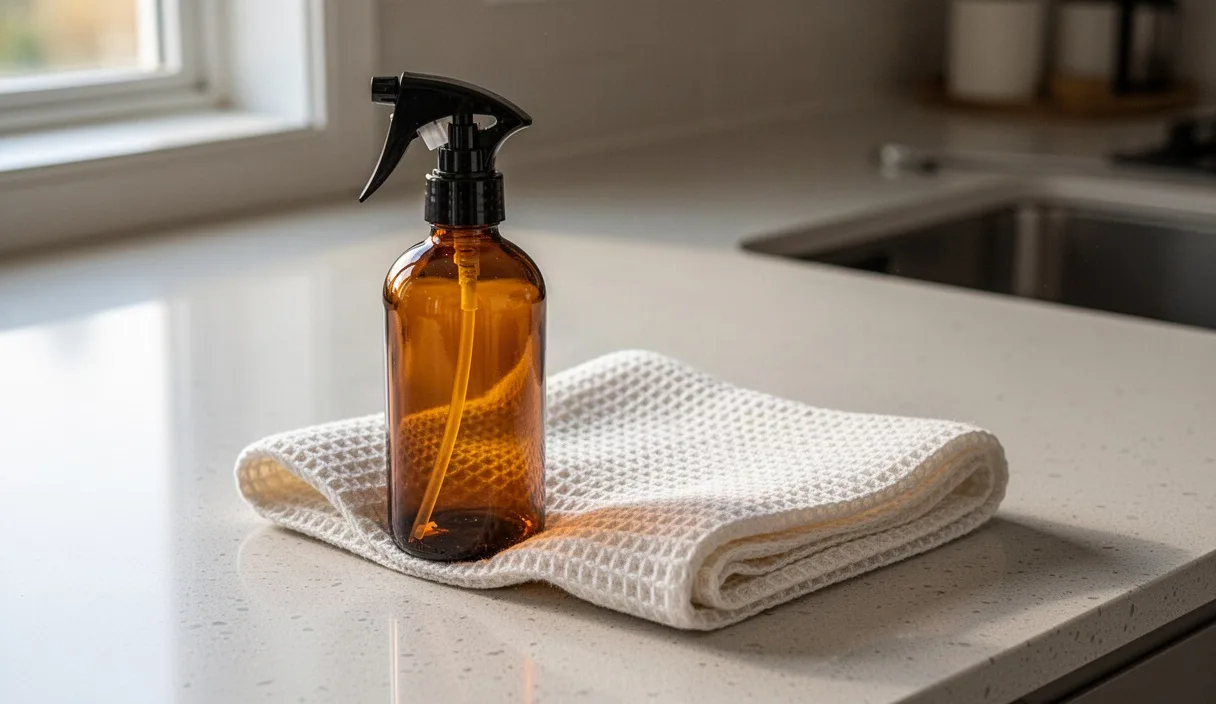
- Fit a standard trigger sprayer directly onto the original brown peroxide bottle to prevent light-induced degradation during transfer.
- Spray the surface generously until an unbroken film of liquid covers the entire prep zone.
- Let the liquid stand undisturbed for at least 5 minutes. If drafts or low humidity cause edges to dry early, re-spray lightly to keep the surface uniformly wet.
- Wipe clean with a freshly washed microfiber cloth, or allow the residual liquid to air-dry completely into oxygen and water.
Hydrogen peroxide has a shelf life that requires monitoring. An unopened brown bottle typically retains its concentration for roughly 12 months. Once the induction seal is broken, the compound decomposes steadily, losing its sanitizing potency over 30 to 90 days. You can test your peroxide by dispensing a small splash into a sink drain: if it does not fizz immediately on contact with residual drain debris, its active concentration has fallen below therapeutic sanitizing thresholds, and it should be replaced.
Risks and Ventilation Needs When Using Bleach Solutions
Sodium hypochlorite remains one of the most accessible broad-spectrum biocides, but its risks to respiratory health and indoor air quality are considerable. Bleach is not an all-purpose detergent; it is a caustic oxidizer. When sprayed or poured in enclosed kitchens, chlorine compounds vaporize into the breathing zone, reacting with moisture on human mucus membranes to form corrosive hypochlorous and hydrochloric acids. This can trigger acute bronchospasms, exacerbate asthma, and irritate eyes and throats.
Mixing bleach with other everyday household chemicals creates dangerous volatile reactions. Combining bleach with an acid such as vinegar, lemon juice, or citric descalers releases lethal chlorine gas (Cl2). Combining bleach with ammonia-based glass cleaners or protein-rich fluids generates toxic chloramine vapors. Because kitchens frequently harbor acidic food residues (tomato juice, citrus, vinegar marinades), applying high-strength bleach to an unwashed counter can inadvertently generate small plumes of hazardous gas.
When circumstances call for bleach, such as deep-cleaning a sink basin after handling poultry with suspected pathogen contamination, precise dilution and active ventilation are mandatory:
- Open adjacent kitchen windows to generate cross-ventilation.
- Activate the range exhaust hood, provided it vents directly to the exterior rather than recirculating air into the kitchen.
- Never mix bleach into warm or hot water; elevated temperatures accelerate the breakdown of hypochlorite into airborne chlorine gas. Use cold tap water only.
- For sanitizing food prep surfaces, mix 1 tablespoon (15 milliliters) of 5.25 percent to 8.25 percent household bleach per gallon (3.8 liters) of cold water, which produces approximately 200 ppm of available chlorine.
- Apply the dilute solution with a damp rag or pour it carefully rather than atomizing it through a misting trigger sprayer, which forces fine aerosolized droplets into your breathing path.
- Wear protective nitrile gloves to avoid lipid stripping and chemical burns on your hands.
Surface Compatibility for Stone, Wood, and Stainless Steel
A sanitizer that safely disinfects one kitchen surface may ruin another. Selecting the wrong chemical agent can pit metals, strip protective coatings, degrade synthetic adhesives, or dissolve calcium carbonate matrixes inside expensive natural stones. Assessing the structural properties of your counters and cutting tools must precede the application of any low-tox sanitizer.
Natural Stone and Engineered Quartz
Natural stones such as marble, limestone, and travertine contain calcium carbonate, a basic mineral that reacts immediately with acids. Applying vinegar, citric acid, or acid-based plant extracts to these surfaces causes rapid chemical etching, leaving dull, rough patches that cannot be cleaned away. Granite contains fewer acid-sensitive carbonates, but its protective resin sealers degrade under repeated acid exposure. Engineered quartz counters use polymer resins to bind ground quartz; concentrated bleach and prolonged contact with hydrogen peroxide can discolor, cloud, or weaken these synthetic resins over time. For engineered and natural stones, stick to neutral detergent washes followed by light applications of properly diluted 200 ppm bleach or dilute hydrogen peroxide, quickly wiped down after the designated contact time.
Hardwood and Bamboo Cutting Boards
Wood and bamboo are porous, hygroscopic materials that absorb moisture and expand. Concentrated chlorine bleach severely damages the lignin that bonds wood fibers together, causing boards to fuzz, crack, and dry out prematurely. Furthermore, chlorine binds to wood pores, making thorough rinsing difficult. Strong acids dry out timber as well. For raw wood prep surfaces, hydrogen peroxide (3 percent) is the safest active sanitizer. It penetrates the porous structure, neutralizes bacteria, and degrades into moisture and oxygen without depositing toxic synthetic salts. Follow peroxide treatments with food-grade mineral oil or beeswax to prevent moisture uptake.
Stainless Steel Sinks and Worktops
Despite its name, stainless steel is vulnerable to localized chemical attack, specifically from chlorides. Sodium hypochlorite contains reactive chloride ions that break down the passive chromium oxide layer that shields the steel from rust. Leaving bleach solutions on stainless steel, or failing to rinse them thoroughly, creates microscopic pits, rust stains, and stress-corrosion cracking over time. Acetic and citric acids, by contrast, serve as effective chelating agents that remove hard water mineral scale from steel without pitting it. Hydrogen peroxide is also safe for stainless steel, making it the preferred sanitizer for metal counters and basin interiors.
Safe Storage Guidelines Away from Heat and Sunlight
Sanitizing agents derive their efficacy from chemical instability: their tendency to react quickly with surrounding materials. This same volatility means that incorrect storage conditions can quickly render them inactive or turn them into safety hazards. Heat, ultraviolet radiation, and air exposure accelerate the degradation of bleach, hydrogen peroxide, and mixed acid solutions.
Hydrogen peroxide decomposes when exposed to visible light and ultraviolet wavelengths. The energy from photons breaks the oxygen-oxygen single bond, splitting the solution into liquid water and gaseous oxygen. This is why manufacturers distribute peroxide exclusively in opaque dark brown plastic bottles. Decanting peroxide into clear glass or translucent spray bottles will degrade the formula to plain water within days. Always keep peroxide in its factory container, stored in a dark cabinet below 72 degrees Fahrenheit (22 degrees Celsius).
Household bleach also deteriorates steadily inside its container. A standard bottle of sodium hypochlorite loses roughly 1 to 2 percent of its active chlorine concentration each month at room temperature. If stored in a warm utility closet, a garage, or an under-sink cabinet adjacent to an uninsulated dishwasher, heat accelerates this breakdown, converting the active chemical into salt and water. Bleach should be purchased in small volumes, replaced every six months, and maintained in a temperature-controlled environment away from direct floor heat.
Secondary spray bottles require strict management:
- Never store prepared bleach dilutions for more than 24 hours. Bleach diluted in tap water loses its biocidal strength within a day due to mineral reactions and evaporation. Mix only what you need for immediate tasks.
- Always apply clear, indelible chemical identification labels to secondary containers, specifying the chemical name, the dilution ratio, and the date mixed.
- Store acidic solutions (vinegar, dissolved citric acid) on separate shelves or in distinct catchment basins from hypochlorite bleach to prevent accidental mixing if bottles leak or fall.
- Keep all active agents on high shelving or behind secured cabinet latches, well outside the reach of small children and domestic pets.
Common Mistakes to Avoid
Even conscientious homeowners frequently undermine their sanitization efforts through improper application techniques. Watching out for these common errors prevents property damage and chemical exposure:
- Mixing white vinegar and hydrogen peroxide together in the same container. This reaction creates peracetic acid, a corrosive chemical that irritates the eyes, skin, and respiratory tract, requiring commercial safety controls. Instead, use them sequentially, drying between applications, if an enhanced dual-action clean is needed.
- Using household vinegar for disinfection against heavy viral contamination or raw poultry bacteria. While 5 percent acetic acid kills some vegetative bacteria, it is not recognized as a hospital-grade or broad-spectrum biocide and leaves gaps in antimicrobial defenses.
- Assuming that a chemical is working because it produces a strong scent. Pure sanitizers like hydrogen peroxide produce virtually no odor, whereas dangerous airborne chlorine fumes are often misidentified as clean air.
- Relying on wet wipes that contain quaternary ammonium compounds (quats) on direct food surfaces without performing a subsequent fresh-water rinse, which transfers synthetic surfactants onto food items.
Putting Low-Tox Kitchen Sanitizing into Practice
Building a resilient, low-tox kitchen cleaning system relies on consistency rather than chemical intensity. For everyday cooking that does not involve raw animal proteins, washing surfaces with hot tap water and standard dish soap provides adequate microbial reduction through mechanical removal. Reserve targeted sanitizers for moments of elevated biological risk: processing raw poultry, handling unwashed root vegetables, or sanitizing high-touch surfaces during illness outbreaks.
Begin by equipping your kitchen with the right dedicated tools. Keep one trigger-spray brown bottle of 3 percent hydrogen peroxide near your prep zone for cutting boards and counters. Maintain a small, fresh bottle of unscented bleach in a cool utility closet, pairing it with a calibrated dropper or measuring spoon for precise low-concentration sanitizing when deep disinfection is necessary. Stock powdered citric acid for removing mineral film from stainless steel and descaling appliances, rather than deploying harsh commercial acid cleaners.
For standard food preparation areas, make a habit of washing, rinsing, and applying peroxide, letting it dwell for five minutes while you tackle the dishes. If you face widespread environmental contamination, such as sewage backups, floodwater incursions, or severe mold infestations within kitchen walls, residential sanitizers are insufficient. In those situations, consult an industrial hygienist or a certified structural remediation professional to restore safety to the home.