Every municipal water utility in the United States must meet standards established under the Safe Drinking Water Act. Yet, the liquid pouring from a kitchen faucet rarely matches the pristine chemical profile recorded at the central treatment plant. Water travels through miles of underground distribution mains, aging street pipes, and property-specific service lines before it touches a glass. Along this journey, treated water can pick up dissolved minerals, heavy metals from corroded plumbing, and byproducts created when residual disinfectants interact with decaying organic matter.
Assessing water quality at the faucet requires understanding the difference between quick screening tools and formal analytical chemistry. Homeowners and tenants frequently turn to color-changing paper test strips because they cost little and yield instant numbers. Others invest in certified mail-in laboratory kits that require careful sampling protocols and several weeks of patience. Deciding which method suits your household depends on whether you are tracking routine seasonal fluctuations in water hardness or investigating potential exposure to toxic heavy metals, synthetic chemicals, and industrial runoff.
Municipal Water Reports Versus Point-of-Use Quality
Every summer, community water suppliers issue an annual Consumer Confidence Report. This public document provides detailed data on regulated contaminants detected in the water system during the previous calendar year. It lists average levels of disinfectants, inorganic chemicals, and microbial indicators, comparing them to maximum contaminant levels enforced by regulatory agencies. While these reports provide a reliable overview of the water leaving municipal storage tanks, they cannot account for the final 50 to 500 feet of pipe that delivers water into your home.
Point-of-use water quality describes the exact chemical and biological makeup of water at the faucet aerator. Between the municipal main in the street and your sink, water passes through the utility service connection, the private supply pipe, the water meter, interior plumbing loops, and individual fixture valves. If any of those components contain lead, copper, galvanized iron, or low-grade brass, the water sitting inside them dissolves metal ions through galvanic and chemical corrosion. In homes with private wells, municipal reports do not exist at all, placing the entire burden of monitoring, filtration, and safety verification on the property owner.
Water chemistry also changes seasonally and regionally inside the municipal distribution network. Heavy rainstorms wash agricultural fertilizers and sediment into reservoirs, forcing water operators to increase chlorine doses. In turn, higher chlorine concentrations react with natural organic matter to generate higher levels of trihalomethanes and haloacetic acids. By the time water completes its transit through distribution lines, the dissolved oxygen levels, disinfectant residuals, and sediment burdens vary significantly from the plant benchmarks published in the annual report.
What At-Home Test Strips Accurately Measure
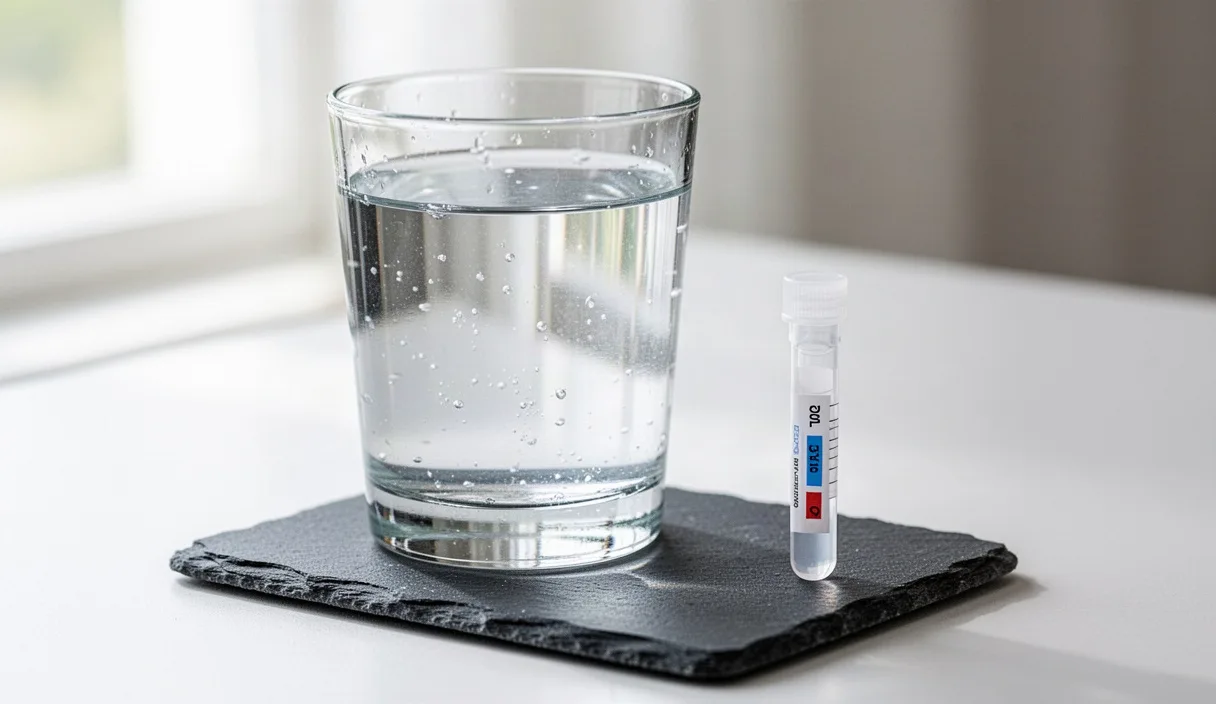
At-home test strips rely on dry reagent pads bonded to thin plastic backings. When dipped in water, chemical compounds impregnated on the paper react with specific dissolved ions, producing a visible color shift. Users compare these colors to a printed chart on the bottle under indirect natural light to determine concentration ranges. These kits cost between 15 and 35 dollars for a pack of 50 to 100 strips, making them practical for repeated, routine checks.
Test strips demonstrate acceptable field accuracy when reading basic water parameters that exist at higher concentrations, measured in parts per million (ppm) or milligrams per liter (mg/L). They are well suited for evaluating the following characteristics:
- pH: Most strips reliably measure acidity and alkalinity between 6.0 and 9.0 in increments of 0.5 units, which helps determine whether water is corrosive or scale-forming.
- Total Hardness: Strips measure dissolved calcium and magnesium carbonate concentrations, usually in brackets like 25, 50, 120, 250, and 425 ppm, which is sufficient to calibrate a salt-based water softener.
- Free and Total Chlorine: Reagents detect residual disinfectant levels from 0.5 to 10 ppm, allowing you to confirm whether standard carbon filters are removing chlorine effectively.
- Total Alkalinity: Strips track the buffering capacity of water in ranges between 40 and 240 ppm, indicating how resistant the water is to sudden pH drops.
- Nitrates and Nitrites: Strips detect agricultural runoff indicators, though their resolution is coarse, typically jumping from 0 to 10, 25, or 50 ppm.
The primary limitation of test strips is chemical resolution. Strips cannot distinguish between parts per million and parts per billion (ppb). Toxic heavy metals like lead cause health damage at single-digit parts per billion, a scale far too small for reagent pads to register. Furthermore, strips are prone to user error: holding the strip in water a few seconds too long washes the dry reagents off the pad, while reading the color after 60 seconds rather than the specified 30 seconds allows ambient oxygen to darken the pads, producing false-positive readings.
When Certified Laboratory Testing Is Necessary
When the concern involves chronic toxic exposure, subtle industrial pollution, or private well safety, certified laboratory testing is the only defensible diagnostic route. Certified testing facilities follow standardized methods validated by environmental agencies, utilizing instruments such as Inductively Coupled Plasma Mass Spectrometry (ICP-MS) and Gas Chromatography-Mass Spectrometry (GC-MS). These instruments detect contaminants down to fractions of a single part per billion.
Mail-in test kits from an accredited laboratory include specific preservation vials, ice packs, strict sampling guidelines, and a chain-of-custody document. You fill the sample containers according to precise directions and ship them back via express courier. A certified laboratory test becomes essential under several specific conditions:
- Private Well Monitoring: Well owners should run a comprehensive laboratory analysis annually for total coliform, Escherichia coli, nitrates, and heavy metals, as private aquifers lack regular municipal disinfection and oversight.
- Suspected Lead or Heavy Metal Intrusion: If plumbing age or visual inspection suggests lead pipes or solder, only ICP-MS lab analysis can verify compliance with the 15 ppb lead action level.
- Industrial and Agricultural Runoff: Households near active farmland, chemical manufacturing, airports, or landfills require targeted panels for volatile organic compounds, synthetic pesticides, and per- and polyfluoroalkyl substances (PFAS).
- Unexplained Staining, Odors, or Health Symptoms: Water that leaves blue-green stains on porcelain, smells like rotten eggs, or tastes distinctly metallic requires professional evaluation to identify the exact mineral or microbiological cause.
A reputable laboratory will hold accreditation under the National Environmental Laboratory Accreditation Program (NELAP) or equivalent state environmental licensing boards. Standard screening panels from these labs range from 140 to 350 dollars, while specialized panels covering dozens of PFAS compounds can exceed 400 dollars. Although expensive, these tests eliminate guesswork by providing quantitative data backed by rigorous quality control blanks and spike recoveries.
Identifying Lead and Copper in Pre-1986 Plumbing
Prior to the 1986 amendments to the Safe Drinking Water Act, plumbing systems throughout North America routinely used lead service lines, lead-based pipe solder, and brass alloys with high lead content. Lead solder used to connect copper piping often contained 50 percent lead and 50 percent tin. While copper itself is an essential dietary nutrient, dissolved copper concentrations exceeding the action level of 1.3 ppm can cause acute gastrointestinal irritation and long-term liver or kidney strain. Lead, by contrast, has no safe threshold in human biology, accumulating in bone tissue and damaging neurological development.
To accurately assess lead and copper levels in household water, you must follow a two-tier sampling procedure designed to differentiate between fixture contamination and service line contamination:
- Preparation and Stagnation: Turn off all indoor and outdoor faucets for at least 6 hours, but no more than 8 hours. Do not run dishwashers, washing machines, or flush toilets during this window. This stagnation period allows water to sit motionless, absorbing metal ions from surrounding pipes and solder joints.
- Collecting the First-Draw Sample: Place an unwashed, wide-mouth, 1-liter sample bottle directly underneath the cold water faucet you use most often for drinking. Turn the tap on to a moderate, steady flow and immediately fill the bottle to the 1-liter fill line without letting any water escape down the drain. This first-draw sample captures the dissolved metals that leached from the faucet body, shut-off valve, and the first few feet of branch plumbing.
- Collecting the Flushed Sample: Allow the cold water tap to continue running at full flow for 2 to 3 minutes, or until the water turns noticeably colder, signaling that fresh water has arrived from the buried street main. Fill a second 1-liter laboratory bottle. This flushed sample indicates whether the incoming supply from the municipal line or private well contains background metal contamination, or if the source is confined entirely to the interior plumbing of the house.
If the first-draw sample shows elevated lead while the flushed sample drops below the laboratory detection limit, the issue resides within the interior plumbing, fixtures, or local solder points. If both samples demonstrate high concentrations, the municipal service lateral, well pump components, or water main itself may be constructed of lead or heavily degraded copper.
Interpreting Total Dissolved Solids Readings
Handheld Total Dissolved Solids (TDS) meters are frequently marketed as universal purity detectors, but their real-world utility is much more narrow. These devices do not count chemical particles directly. Instead, they pass a small electrical current between two metal probes, measure the electrical conductivity of the liquid, and apply a mathematical multiplier to estimate the total concentration of charged ions in parts per million or milligrams per liter.
The reading displayed on a TDS meter reflects all dissolved inorganic minerals, including calcium, magnesium, sodium, potassium, chloride, sulfate, and bicarbonate. It also reflects dissolved heavy metals, but only if they are present in huge quantities. Herein lies the fundamental flaw of relying on a TDS meter as a safety indicator: a glass of water containing 350 ppm of beneficial calcium carbonate and mineral salts will register a high TDS reading of 350. Conversely, a glass of distilled water tainted with 40 parts per billion of lead, dissolved benzene, or E. coli bacteria will register a low reading near zero, because non-ionic pollutants, biological pathogens, and trace metals do not conduct enough electricity to move the meter significantly.
TDS meters serve a valid diagnostic purpose when used to assess specific treatment systems rather than absolute water toxicity. They are the standard tool for monitoring reverse osmosis systems. A properly functioning reverse osmosis membrane should reduce incoming mineral conductivity by 90 to 96 percent. If your feed water measures 400 ppm TDS and the filtered permeate measures 24 ppm, the membrane is intact and operating correctly. If that permeate reading rises to 90 ppm, the membrane has developed micro-tears or the internal seal has degraded, indicating it is time to replace the cartridge.
Selecting the Right Filter Type for Your Water Profile
Filtration systems must be matched directly to the verified contaminants present in your supply. Installing a filter based on generalized marketing claims rather than your specific water profile often wastes money and leaves health-relevant pollutants unaddressed. For instance, basic carbon pitchers excel at improving aesthetic taste by stripping out chlorine, but they do little to capture dissolved fluoride, nitrates, or heavy minerals.
| Filter Technology | Primary Target Contaminants | Ineffective Against | Operational Lifespan |
|---|---|---|---|
| Activated Carbon Block | Chlorine, chloramines, taste, odor, large VOCs, basic sediment | Dissolved minerals, heavy metals (unless modified), nitrates, fluoride | 3 to 6 months |
| Ion-Exchange Resin | Calcium, magnesium (hardness ions), trace dissolved heavy metals | Bacteria, viruses, organic chemicals, chlorine byproducts | Regenerated with salt; media lasts 5 to 10 years |
| Reverse Osmosis | PFAS, lead, arsenic, nitrates, fluoride, total dissolved solids | Gaseous chlorine, dissolved volatile organic compounds (needs carbon pre-filter) | Membrane lasts 2 to 4 years; pre-filters changed every 6 to 12 months |
| Kinetic Degradation Fluxion (KDF) | Free chlorine, dissolved heavy metals (copper, lead), hydrogen sulfide | Organic compounds, pesticides, mineral hardness, bacteria | 1 to 3 years depending on water volume and temperature |
| Ultraviolet (UV) Disinfection | Microbial pathogens, cysts, coliform bacteria, viruses | Heavy metals, dissolved chemicals, sediment, minerals, taste, odor | Lamp replaced annually; quartz sleeve cleaned semi-annually |
When selecting a filtration unit, examine the technical data sheet for certification under independent performance standards. NSF International and the American National Standards Institute (ANSI) maintain clear validation benchmarks: Standard 42 covers aesthetic effects like chlorine reduction; Standard 53 covers health effects including lead, mercury, and VOCs; Standard 58 applies specifically to reverse osmosis systems; and Standard P473 covers the reduction of PFAS compounds. If a manufacturer claims a product removes toxic compounds without specifying these exact standard verifications, look for an alternative provider that publishes its third-party test reports.
Common Mistakes When Testing Tap Water
Simple procedural errors can invalidate water test results, leading to false panic or an unwarranted sense of security. Avoid these common missteps during the testing process:
- Rinsing preserved laboratory sample bottles: Mail-in lab bottles for metals, nitrates, or bacteria often contain small amounts of chemical preservatives, such as nitric acid or sodium thiosulfate, visible as liquid drops or white powder. Rinsing the bottle before filling washes away the preservative and invalidates the analysis.
- Sampling through aerators and attachments: Leaving a faucet aerator, hose, or screw-on carbon filter attached to the tap introduces trapped debris, sediment, and localized bacterial colonies into the sample. Unscrew the aerator screen and clean the spout lip before sampling.
- Testing hot or blended water: Running warm water through the tap draws from the domestic water heater, which concentrates tank sediment, bacteria, and dissolved anode rod minerals. Unless you are specifically troubleshooting water heater performance, collect only cold tap water for testing.
- Ignoring reading timeframes on test strips: Reagent pads continue to oxidize long after being removed from water. Reading a strip two minutes after dipping rather than the manufacturer-specified 30 or 60 seconds generates falsely elevated readings for hardness, nitrite, and chlorine.
Practical Next Steps
Start your home water evaluation by obtaining the most recent Consumer Confidence Report from your local water district. This establishes your regional baseline, showing what disinfectant chemicals they use (chlorine versus chloramines) and whether the utility has faced recent compliance violations. If you rely on a private well, pull any historical drilling logs and pump records to determine well depth and aquifer construction.
Next, use a high-quality multi-parameter test strip kit to establish basic baseline numbers for pH, total hardness, and free chlorine at your primary kitchen tap. Record these figures in a dedicated home notebook. If the water demonstrates extreme hardness above 180 ppm, you know that water-softening solutions are required to protect plumbing fixtures and household appliances.
If your home was constructed before 1986, or if you source your water from a private well, bypass retail test strips for heavy metal analysis. Order an EPA-certified laboratory test kit to execute a formal first-draw and flushed lead and copper diagnostic protocol. Once the laboratory returns quantitative data, compare the findings directly to health-based action levels, and select an NSF/ANSI-certified point-of-use or whole-home treatment device tailored specifically to the chemical profile of your tap.