Most residential bedrooms are lit for daytime utility rather than biological recovery. Standard overhead ceiling fixtures, recessed pot lights, and unshielded white bulbs flood indoor spaces with illuminance levels between 150 and 300 lux. While this brightness is useful when organizing clothes or cleaning, it signals daytime alertness to the brain long after the sun has set. The nervous system requires a steady reduction in photon exposure to initiate the biological cascade that cools core body temperature and promotes restorative sleep architecture.
Creating an intentional lighting protocol does not require expensive redesigns or complex home automation. By understanding how the human retina registers intensity, wavelength, and spatial angle, you can reconfigure existing fixtures and incorporate targeted accent lights to preserve nighttime physiology. Calibrating your light exposure during the final two to three hours of the evening creates a clear sensory transition between active waking hours and restorative sleep.
How Evening Lux Levels Affect Melatonin Signals
The human circadian system responds to light through intrinsically photosensitive retinal ganglion cells (ipRGCs). These specialized photoreceptors are embedded across the retina and contain melanopsin, a photopigment sensitive to short-wavelength light. When exposed to bright environments, ipRGCs transmit direct electrical signals to the suprachiasmatic nucleus, the master circadian pacemaker located in the hypothalamus. The suprachiasmatic nucleus uses these signals to halt the synthesis of melatonin in the pineal gland, maintaining daytime vigilance.
Lux is the standard unit used to quantify illuminance, measuring luminous flux per unit area. Outdoor daylight varies from 10,000 lux on an overcast afternoon to more than 80,000 lux under clear midday skies. In contrast, evening biology functions best under a steep descent. When light levels at the eye exceed 30 to 50 lux in the evening, melatonin secretion is suppressed, shifting the circadian phase later into the night. Maintaining light exposure below 15 to 20 lux during the hour before sleep allows endogenous melatonin production to rise uninhibited.
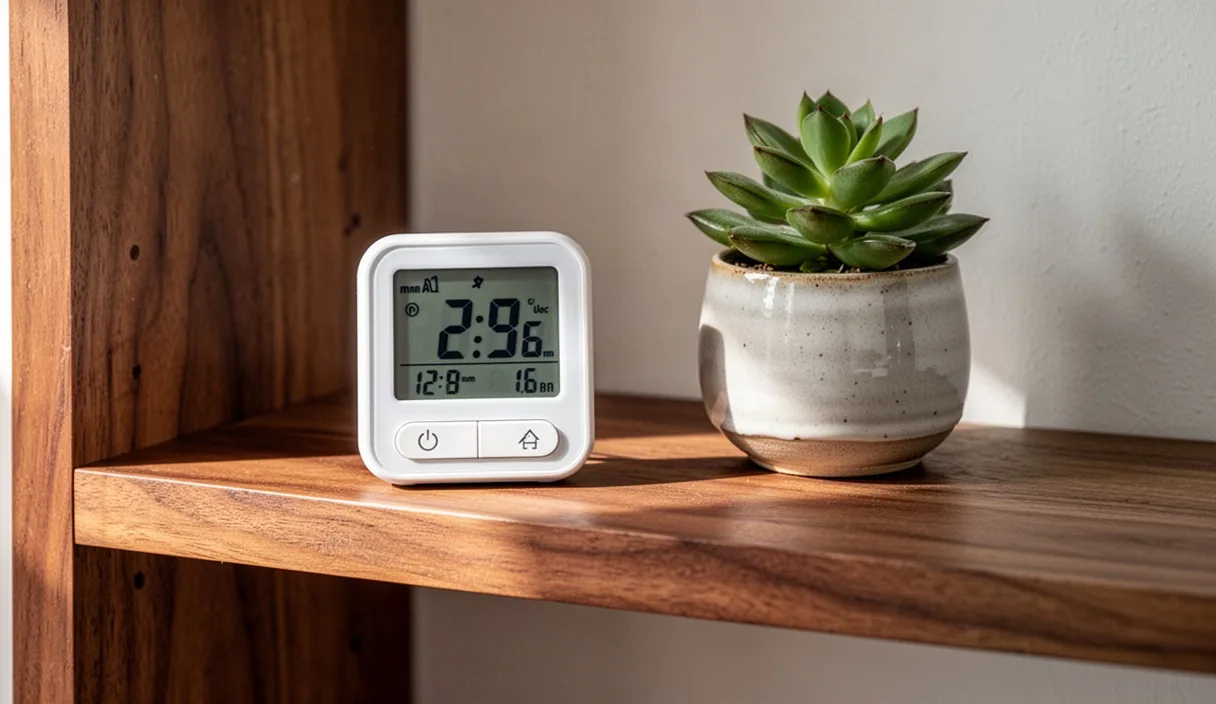
Measuring your baseline room lighting provides useful data for practical adjustments. Inexpensive digital lux meters or calibrated smartphone light-meter applications placed directly at eye level can show you the real intensity of your space. A typical reading taken while sitting up in bed under an overhead fixture often registers 120 to 180 lux, an intensity sufficient to delay biological sleep readiness. Adjusting bedside fixtures to deliver less than 10 lux at pillow height creates the light conditions necessary for normal nocturnal endocrine patterns.
Choosing Warm Color Temperatures for Bedside Lamps
Correlated Color Temperature (CCT) measures the relative warmth or coolness of light, expressed in kelvins (K). Higher numbers, such as 5000K or 6500K, indicate cool, blue-enriched white light that mimics midday sunlight and triggers peak melanopsin response. Lower numbers indicate warmer, red-orange tones with lower energy in the blue spectrum. Standard residential warm-white bulbs typically sit at 2700K, which remains moderately stimulating if used at high illuminance.
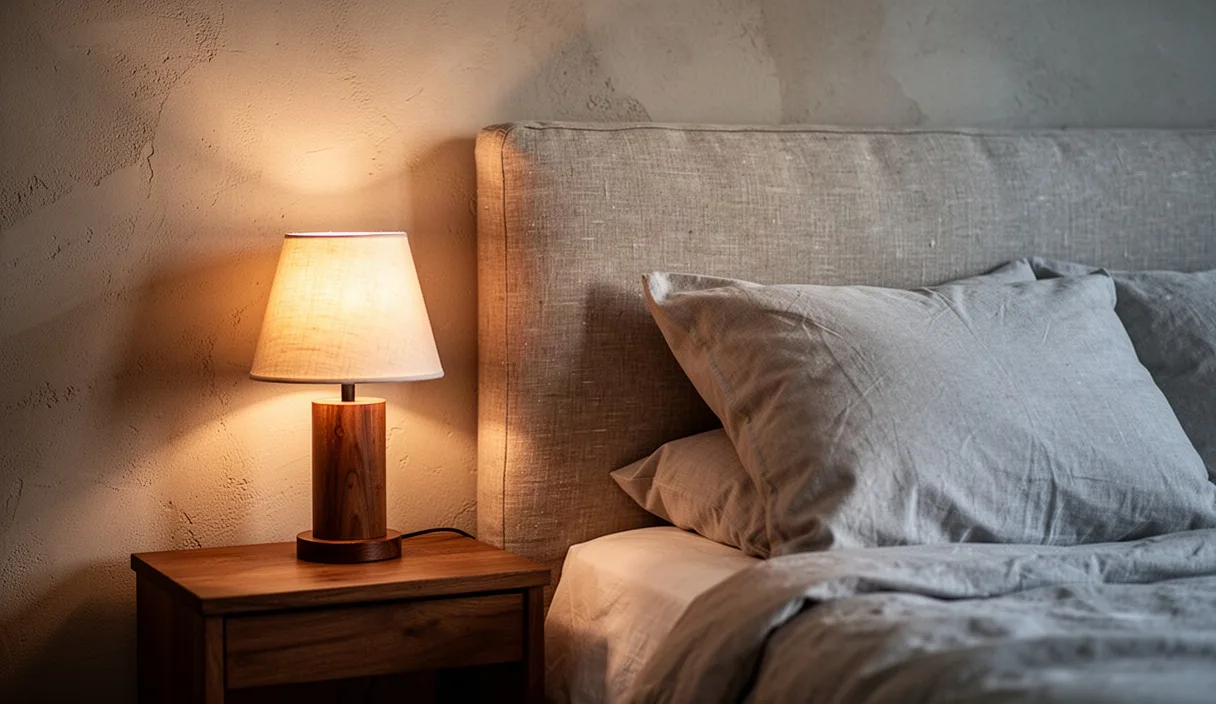
For bedside use, color temperatures between 1800K and 2200K provide a functional balance between visibility and circadian neutrality. Filament-style amber LED bulbs, candle-simulating incandescent lamps, and filtered continuous-spectrum diodes emit minimal wavelengths in the 460 to 490 nanometer band where melanopsin sensitivity peaks. When you replace high-kelvin lamps with warm, low-kelvin sources, you reduce melanopic lux without sacrificing your ability to navigate the bedroom or read printed text comfortably.
| Light Source Type | Color Temperature (Kelvin) | Primary Wavelength Output | Suitability for Evening Wind-Down |
|---|---|---|---|
| Cool White Utility LED | 5000K to 6500K | 450 to 480 nm (Blue peak) | Poor; suppresses melatonin |
| Standard Warm White LED | 2700K to 3000K | Broad spectrum with blue component | Moderate; requires heavy dimming |
| Deep Amber / Edison LED | 1800K to 2200K | 580 to 630 nm (Amber-orange) | Ideal; minimal melanopic stimulation |
| Pure Red Diode | 620K to 1000K equivalent | 630 to 660 nm (Deep red) | High; zero melanopsin response |
When selecting bulbs, look at both the Kelvin rating and the total lumen output. A 2200K bulb that puts out 800 lumens can still disrupt circadian rhythms through raw intensity alone. Aim for replacement bulbs rated between 150 and 300 lumens, or ensure your fixtures are connected to an inline rotary dimmer or trailing-edge electronic dimmer that drops output into the single-digit lux range.
Positioning Light Sources Below Eye Level
The biological impact of evening light depends on its point of origin in your visual field as well as its wavelength. Human ipRGCs are distributed unevenly across the retina, with the densest concentration located in the inferior (lower) hemisphere. Because the lens of the eye inverts incoming images, light arriving from above eye level casts directly onto this sensitive lower region of the retina. This anatomical layout evolved to register the overarching brightness of the open sky during daylight hours.
Overhead lighting formats, including track systems, ceiling fans with globe kits, and flush-mount fixtures, stimulate these lower retinal pathways directly. In contrast, light sources positioned low to the ground or below horizontal eye level land primarily on the superior retina, which has a lower concentration of ipRGCs. This spatial positioning reduces the neuroendocrine disruption caused by artificial light, even when keeping identical lumen outputs.
To implement this layout, remove reliance on ceiling switches after sunset and introduce low-mounted accent lighting:
- Place weighted accent lamps on baseboards or low shelving units below 36 inches from the floor.
- Install warm LED light strips along the underside of the bed frame, directed downward onto rugs or hardwood.
- Use shielded nightlights plugged into low wall receptacles to illuminate paths to the doorway and bathroom.
- Position bedside reading lights so the shade directs light downward onto the mattress rather than out into the visual field.
Screen Filters Versus Physical Reading Lights
Digital displays on phones, tablets, and e-readers remain a frequent source of evening light disruption. Built-in software utilities like night modes and color-shifting filters shift the screen palette toward orange by suppressing blue pixel sub-channels. While these tools reduce melanopic stimulation by roughly 60 to 78 percent depending on settings, they do not resolve the primary circadian issue: close-range, direct-beam optical exposure. The screen continues to aim focused photon streams directly into your pupils from a distance of 12 to 16 inches.
Physical reading lights paired with non-backlit paper books or front-lit e-ink displays provide a superior alternative. An amber-spectrum clip-on reading light with an adjustable gooseneck delivers targeted illumination exclusively to the reading surface. The light reaches the eye indirectly via reflection from matte paper, scattering photons and decreasing the direct optical load. A small task lamp drawing 2 watts of warm light yields between 8 and 12 lux on the page, compared to the direct glare of a tablet running at 45 to 80 lux.
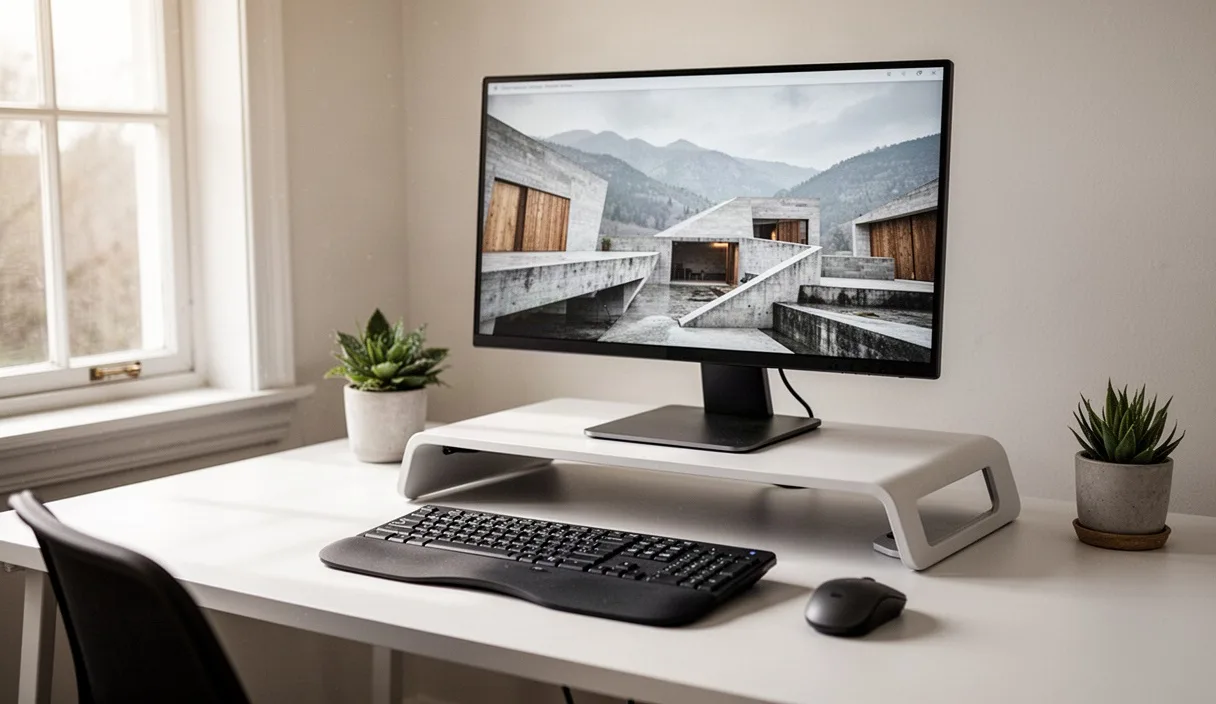
If you must interact with personal computers or mobile devices during the late evening, configure device display brightness down to its lowest legible baseline alongside software filters. However, substituting digital media for tactile reading under an amber task light remains the more reliable strategy for circadian stability. Keep dedicated book lights clipped directly to bed headboards or hardback book covers, positioned so the bulb itself remains shaded from your direct line of sight.
Managing Morning Sunlight Entry with Double Drapes
A functional evening wind-down environment must anticipate morning light conditions. Melatonin suppression needs to occur reliably at dawn to reinforce a tight 24-hour cycle, but uncontrolled light entry can trigger fragmented sleep cycles in the final hours of rest. Streetlights, commercial signs, and seasonal early sunrises can penetrate standard bedroom blinds, elevating room lux above 5 lux during the deep phases of nocturnal rest.
A double-drape curtain system allows precise control over ambient light throughout the day and night cycle. This setup relies on a double curtain rod mounting two separate fabric layers: an inner sheer panel and an outer opaque blackout drape. The inner sheer diffuses bright daytime sun while preserving privacy. The outer drape, constructed with an internal thermal or dense woven lining, blocks incoming light at night and seals the room from urban light pollution.
To install an effective double-drape system, follow these structural guidelines:
- Select wrap-around French return rods that curve directly back to the wall, eliminating side light gaps.
- Mount the rod bracket 4 to 6 inches above the window frame to prevent overhead light leakage.
- Ensure the outer drapery panels extend 3 to 5 inches beyond each side of the window frame.
- Let the bottom hem rest against the floor or puddle slightly to block upward light bounce.
- Overlap the center panels by at least 3 inches when closed, securing them with magnetic tape if streetlights are strong.
A Structured Evening Lighting Timeline
Circadian biology responds to gradual environmental transitions rather than abrupt switches. Shifting instantly from a fully illuminated home to complete darkness can cause psychological restlessness and does not give the pineal gland adequate lead time to accumulate circulating melatonin. A phased protocol aligned with the evening clock eases the nervous system toward sleep.
Adjust this chronological framework to match your target bedtime, maintaining roughly two hours of total step-down time:
Two Hours Before Bed: Overhead Cutoff
Extinguish all recessed ceiling fixtures, central chandeliers, and high-mounted kitchen or hallway spotlights. Switch living areas and the bedroom over to secondary floor lamps and shielded table lamps fitted with 2700K or lower bulbs. Lower your overall ambient light footprint to approximately 60 lux. Close daytime drapes to obscure urban exterior lighting.
One Hour Before Bed: Bedside Shift and Warm Downgrade
Move into the bedroom space. Turn off all floor lamps that sit at or above eye level. Activate low-mounted accent lights, baseboard strip lights, or 1800K to 2200K bedside table lamps dialed down via dimmer switches. Illuminance at your typical seated position should now register under 20 lux. Shut down high-luminance computer monitors and televisions.
Twenty Minutes Before Bed: Micro-Task Illumination
Extinguish bedside table lamps and switch exclusively to a single low-wattage, warm-spectrum task light or clipped reading light. If completing evening hygiene routines in the bathroom, avoid multi-bulb cosmetic vanity mirrors; use a portable nightlight or adjacent hallway light instead. Ambient bedroom lux should drop below 10 lux, targeting only the pages of a book or the immediate surface beside the bed.
Sleep Onset: Complete Darkening
Turn off all active light sources. Ensure phone screens are placed face-down on nightstands, away from your direct field of view. Confirm the blackout outer drapes are sealed across the center seam and flush to the perimeter walls. Total bedroom illuminance should measure near zero lux, allowing the eyes to adjust to true darkness.
Common Mistakes to Avoid
The most frequent error in evening lighting design is the unrecognized exposure spike in the bathroom. Many people follow an intentional dimming protocol in the bedroom for an hour, only to enter a bathroom illuminated by eight 40-watt equivalent globe bulbs over the vanity mirror. Spending seven minutes under 400 lux of cool white light to brush teeth and wash up can immediately reset ipRGC signaling and blunt accumulated melatonin. Place low-lumen, warm-toned nightlights in the bathroom for nighttime hygiene routines.
Another prevalent issue involves unshielded indicator LEDs on household appliances and chargers. Routers, power strips, humidifiers, air purifiers, and baby monitors often feature pinhead-sized blue or green status lights. In an otherwise pitch-black bedroom, these pinpoint sources cast direct glare across the room, disrupting sleep continuity. Cover bright indicator diodes with small squares of opaque black light-blocking tape.
Finally, relying entirely on smart bulb schedules without addressing direct line-of-sight exposure remains counterproductive. A smart bulb automatically dialed down to 2000K can still disturb the retina if it sits in an unshaded clear glass fixture positioned directly in your sightline while lying in bed. Always pair low-kelvin bulbs with opaque fabric shades, frosted diffusers, or downward-facing fixtures that hide the bare diode from direct view.
Practical Next Steps for Your Bedroom
Begin improving your evening environment by conducting a simple visual lighting inventory tonight. Sit in your bed in your normal resting position, switch on your regular evening fixtures, and note every light source visible to your eyes. If you can see bare bulbs, if fixtures hang overhead, or if sharp white points of light pierce the room, you have identified the primary targets for adjustment.
Address fixtures systematically rather than attempting a whole-home overhaul at once. Start by replacing your bedside lamp bulbs with 2200K or amber-tinted options rated under 300 lumens, or attach an inline cord dimmer to lower your existing lamps. Next, inspect your window coverings and correct light leaks around the frames using simple mounting adjustments or blackout liners. Small physical changes to fixture height, shade opacity, and bulb warmth yield measurable improvements in bedroom conditions.
If you implement a structured lighting timeline and continue to experience chronic sleeplessness, severe daytime fatigue, or restless sleep, consult a board-certified sleep medicine physician. Environmental adjustments support healthy circadian rhythms, but clinical conditions such as obstructive sleep apnea, restless legs syndrome, and chronic restful sleep support require thorough medical evaluation and evidence-based clinical treatment.